


The RPG “mage” archetype is a tired script. We’ve been conditioned for decades to expect the glass cannon: a character who can melt a boss with a fireball but collapses if a stiff breeze hits them.
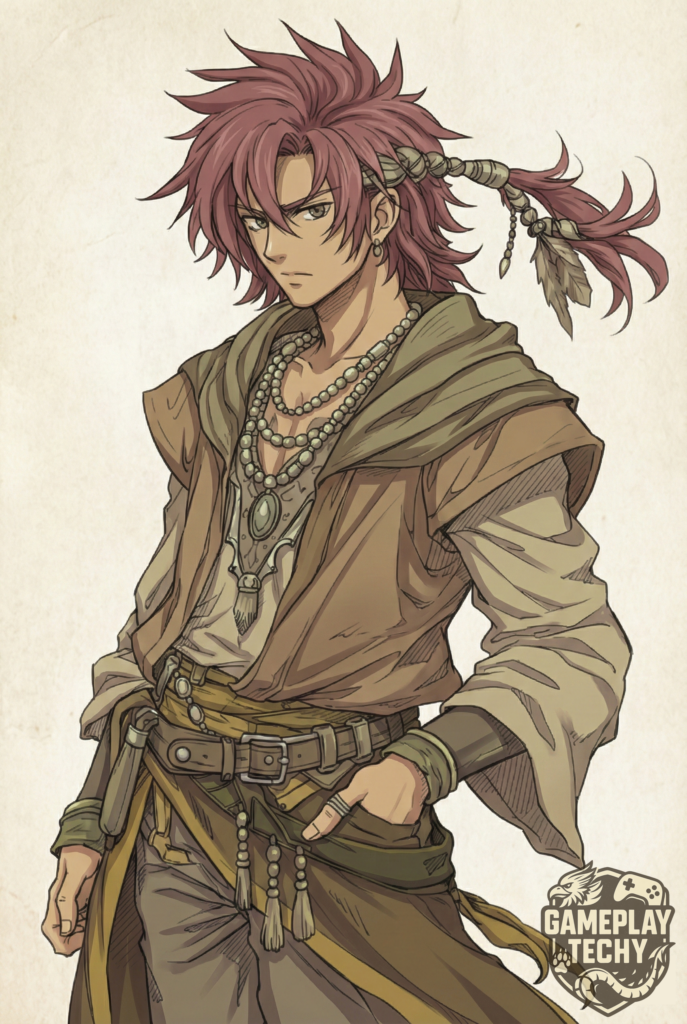
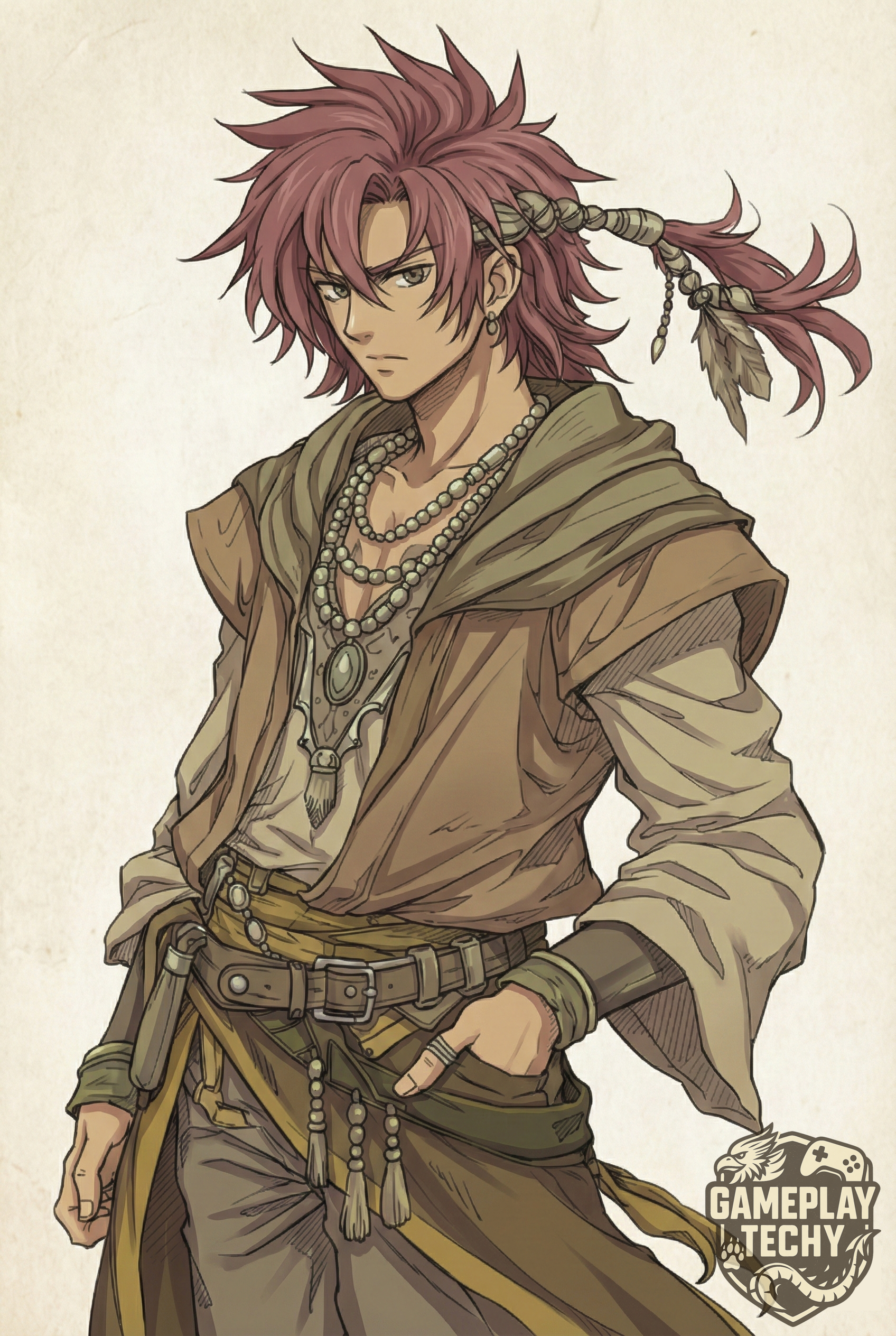
In Wild Arms 3, Gallows Carradine looks like he fits that mold. He has the highest Sorcery (SOR) stat, he’s the natural candidate for your heavy-hitting elemental Mediums, and he’s usually the guy you task with casting Extend for party-wide buffs.
But if you’re ignoring his ARM upgrades because “he’s just the magic guy,” you’re falling for a trap that’s been slowing down your turn economy for twenty years.
The FP Tax
The core of Wild Arms 3 isn’t mana; it’s Force Points (FP). You don’t start a fight with the ability to drop a high-level Arcana; you earn it. You gain FP by taking actions, and the most reliable action is the standard “Attack” command.
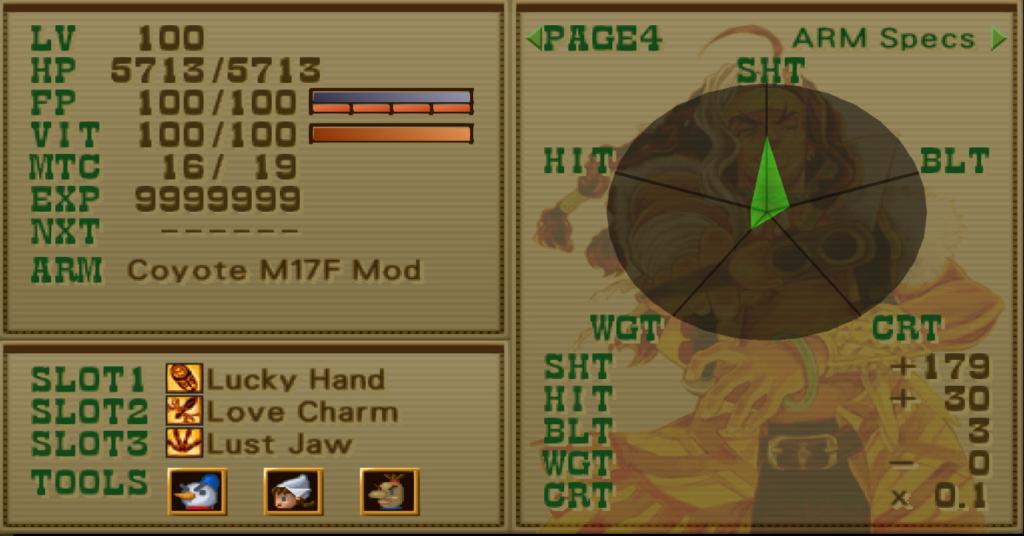
Gallows’ ARM, the Longhorn, is a beast. It has the highest base SHT (Shot) power in the game. (Yeah not what you thought it meant 😉).
When you dump your Gella into his ARM’s SHT and BLT (Bullet) stats, you aren’t just making his physical hits harder, you are building a more efficient engine for his magic. A Gallows that can one-shot a trash mob with a standard physical attack is a Gallows that is gaining massive FP chunks without burning through his turn-priority.
The Weight of Sorcery
The most overlooked stat in the ARM smithy is WGT (Weight). In most RPGs, “upgrading” a weapon implies it gets heavier or more complex. In Filgaia, upgrading WGT reduces it. For Gallows, this is non-negotiable.
His base reaction speed is abysmal. If he’s weighted down by a stock ARM, he’s going to act last. In a game where “Full Mail” or “Shield” needs to be up before the boss breathes fire, a slow mage is a dead mage. By stripping the weight off the Longhorn, you’re ensuring his magic actually happens when it’s relevant, not as a post-mortem for your party.
The Gatling Contingency
There will be moments where magic isn’t the answer. Certain late-game optional bosses have MGR (Magic Resistance) stats that make Arcana look like a light drizzle. This is where the “Bullet” upgrades pay off.
Gallows has a massive HP pool and solid defense. If you’ve invested in his ARM, he can pivot from a caster to a physical tank that uses the Gatling command to dump his high FP pool into a series of physical strikes. Because his ARM scales so well with SHT upgrades, he can often out-damage Jet or Clive in specific burst windows.
The Resolution
Stop treating Gallows’ ARM as a secondary tool. In Wild Arms 3, his gun is the battery for his sorcery.
- Max out SHT first: If he’s going to swing, make it count so he builds FP faster.
- Dump into WGT: A mage that acts last is just a spectator.
- Add 2-3 BLT: You need enough shells to make a Gatling run worth the FP cost when magic fails.
Building Gallows as a pure caster is a relic of bad design habits from other games. In the wasteland, versatility isn’t just a “nice to have”it’s the only way to stay ahead of the patch cycle. Upgrade the Longhorn. Your Arcana will thank you.
The Reliquary: Where we strip away the nostalgia to see how classic systems actually function. Check out the full archive of deep-dives and mechanical breakdowns here.

![Review: The [Specific Obscure Amazon Brand] Keyboard Mechanical Marvel or Plastic E-Waste?](https://gameplaytechy.com/wp-content/uploads/2026/01/keyboard-915520_1920.jpg)
Leave a Reply