

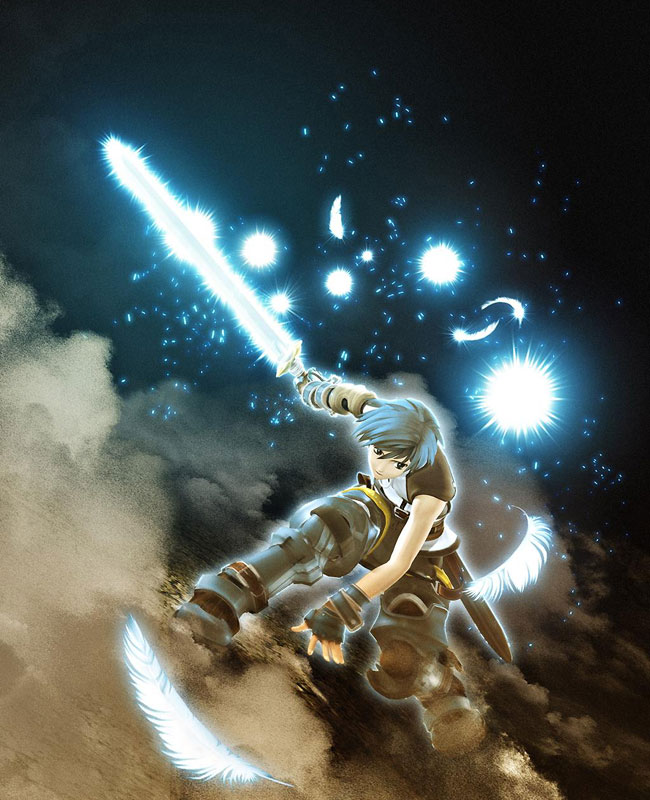
Have you ever picked up a game you’ve never heard of, and it completely rewires your brain? For me, that was Star Ocean: Till the End of Time. If this is your first time hearing about it, you’re in for a treat; if you’re a veteran, welcome back to a classic that still hits in 2026.
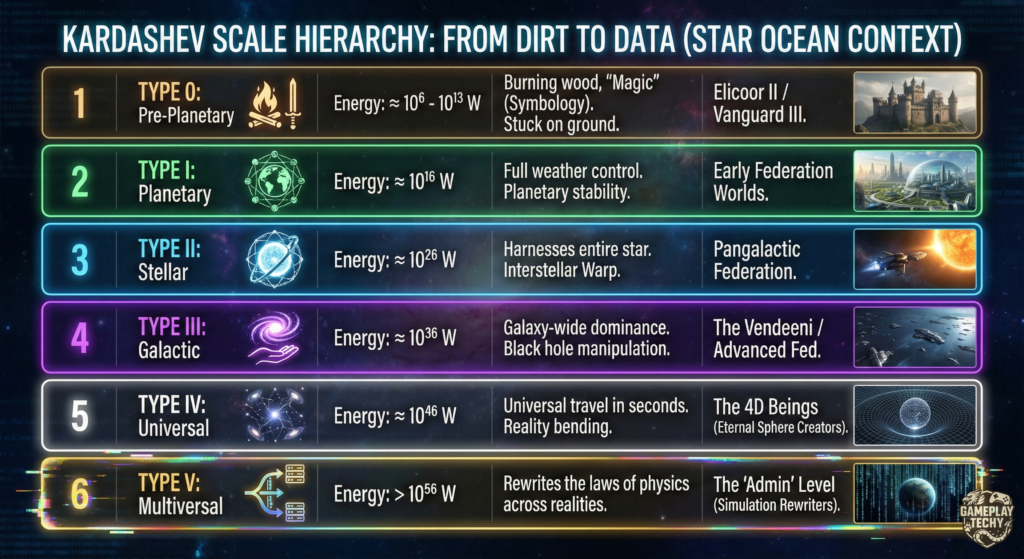
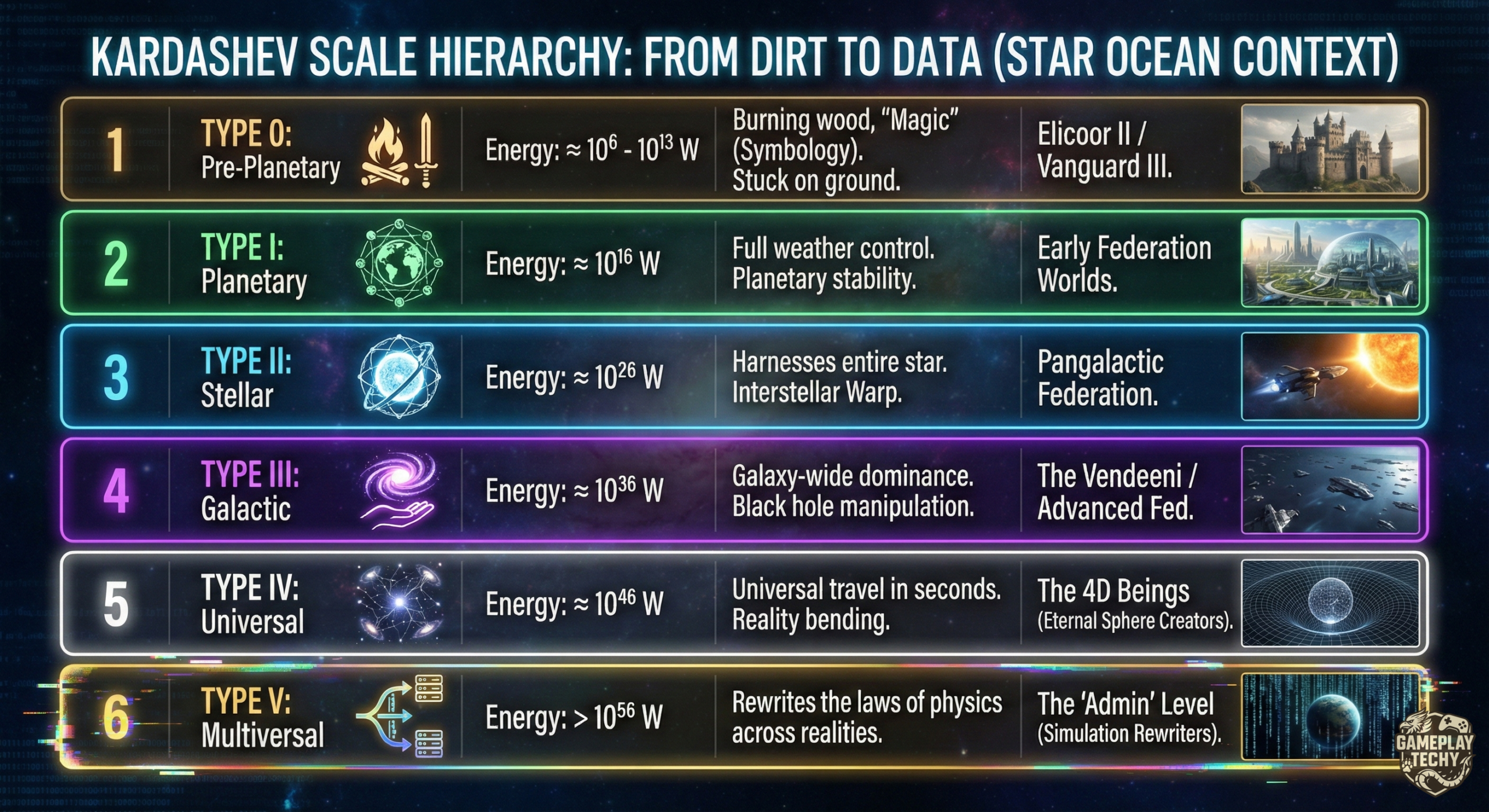
I used to think “Space” was just a vast, empty black void, one light year of travel equals one year of light-speed travel, and we aren’t even close. I figured there was nothing out there. But what if there was an intergalactic war on the other side of the Milky Way? How would we even know? That’s where Fayt Leingod comes in. He starts as part of an advanced civilization but ends up stranded on Elicoor II, a place he classifies as a Type 0 Civilization. And that isn’t just “game lore”; it’s based on the real-deal Kardashev Scale.
In short, the Kardashev Scale is a method of measuring how “advanced” a civilization is based on how much energy they can harness. It’s a ladder of cosmic power: Type I controls their planet, Type II controls their star, and Type III controls their entire galaxy. Since humanity is still struggling to leave our front porch, we’re currently sitting at a humble Type 0.7.
The “Dirt-Farmer” Reality: Life at Type 0
When Fayt crash-lands on Elicoor II, he isn’t just on a new planet; he’s stepped back in time. While the Pangalactic Federation is busy warping through the stars, Elicoor is stuck in a cycle of swords, sorcery, and tilling fields with animals.
In the game, this is called “Underdeveloped,” but in science, it’s a Type 0. A Type 0 civilization hasn’t even mastered its own planet’s energy yet.
We’re talking wood fires, fossil fuels, and a whole lot of hoping the rain comes. Elicoorians have “Symbology” (their version of magic), but to a tech-head like Fayt, it’s just another form of biological energy manipulation they don’t fully understand yet.
PS2 “Open World” Logic: Where Every Journey is a Commitment, Not a Chore
This is exactly why the PS2 era remains the high-water mark for JRPGs. Modern “open worlds” are often just massive, empty maps filled with chores and icons. In Star Ocean: Till the End of Time, “open” meant scale and consequence.
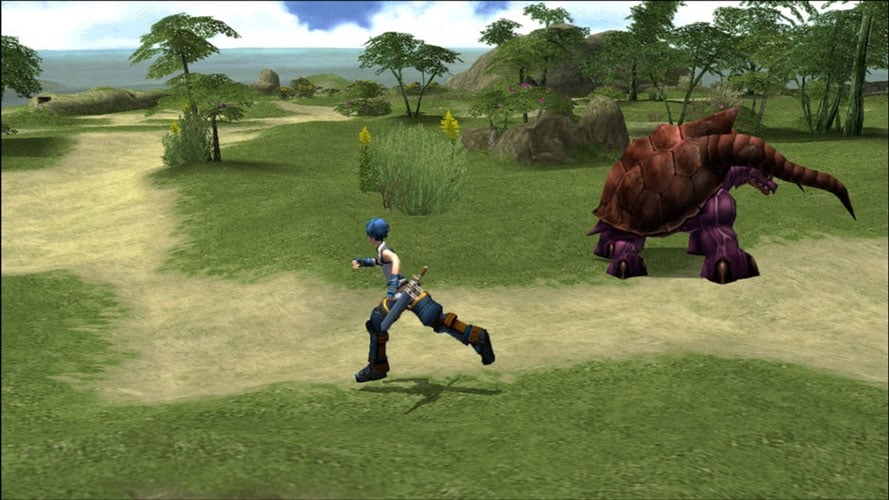
When you leave a town in this game, you aren’t just holding “forward” on the thumbstick; you’re committing to a trek. You have to check your items, ensure your party is healthy, and pray you don’t run into a random encounter that catches you off guard.
The “Journey” vs. The “Icon Hunt”
In the modern era, “open world” usually means a tedious checklist designed by a committee to boost engagement metrics. In Star Ocean 3, the world is treated as a series of distinct, atmospheric biomes where every map discovery feels earned rather than gifted
- Satisfying Traversal: Because you aren’t teleporting every five seconds, finally reaching a new kingdom feels like a massive relief. You’ve physically “traversed” the danger.
- The PS2 “Openness”: It’s not a seamless sandbox like Elden Ring, but it’s dense. Every map layout is designed to funnel you into encounters that test your preparation.
The Combat: Engaging Mobs vs. Tactical Bosses
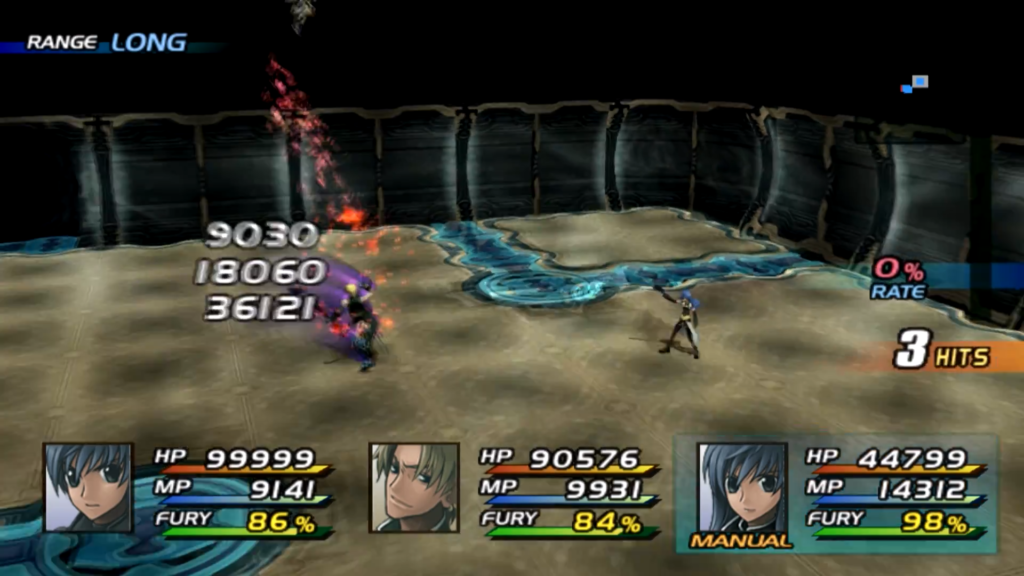
This is where the game separates the casuals from the Sentinels. The real-time combat system was a revelation in 2003, and it still puts most modern “mashing” simulators to shame.
- Standard Encounters: These are your testing grounds. You’re learning the rhythm of the AAA (Anti-Attack Aura) and managing your Fury bar. If you’re just mashing X, you’re going to run out of steam and get stunned.
- The Boss Wall: This is where the game stops being a brawler and starts being a strategy game. You can’t just rely on Fayt. You have to actively switch between party members to manage healing, distract the boss, or set up high-damage chains.
Gameplay Techy’s Insight: Most modern RPGs treat “travel” as dead time between cutscenes. Star Ocean 3 treats travel as gameplay. If you don’t respect the road, the road (or a high-level mob) will end your run before you even see the boss’s health bar.
The Prime Directive Trap
This is where the game gets “unhinged” with its philosophy. Fayt has to follow the UPPP (Underdeveloped Planet Preservation Pact). It’s basically the “don’t give the caveman a laser pointer” rule. If you’re from a Type II civilization, showing up with a communicator or a phase gun on a Type 0 planet is a crime. Why? Because you aren’t just giving them tools; you’re shattering their entire cultural evolution.
The Crafting Industrial Complex: Item Creation
In most games, crafting is a side hustle. In Star Ocean: Till the End of Time, it’s a career. If you want the gear that actually survives the post-game, you have to master Item Creation (IC).
- The Talent Hunt: You don’t just “get better” at crafting. You have to travel the world to recruit Inventors. From the legendary blacksmith Adray to the eccentric alchemists hidden in back alleys, your success depends on your HR department.
- The “Original Invention” Gamble: You set a budget, pick a team, and watch a progress bar. You aren’t just making a sword; you’re trying to discover a patent.
- The Patent Office: This is the most “Gamer Dad” mechanic in history. Once you invent something new, you can patent it and earn passive income every few minutes of gameplay. It’s the original “make money while you sleep” (or while you grind) strategy.
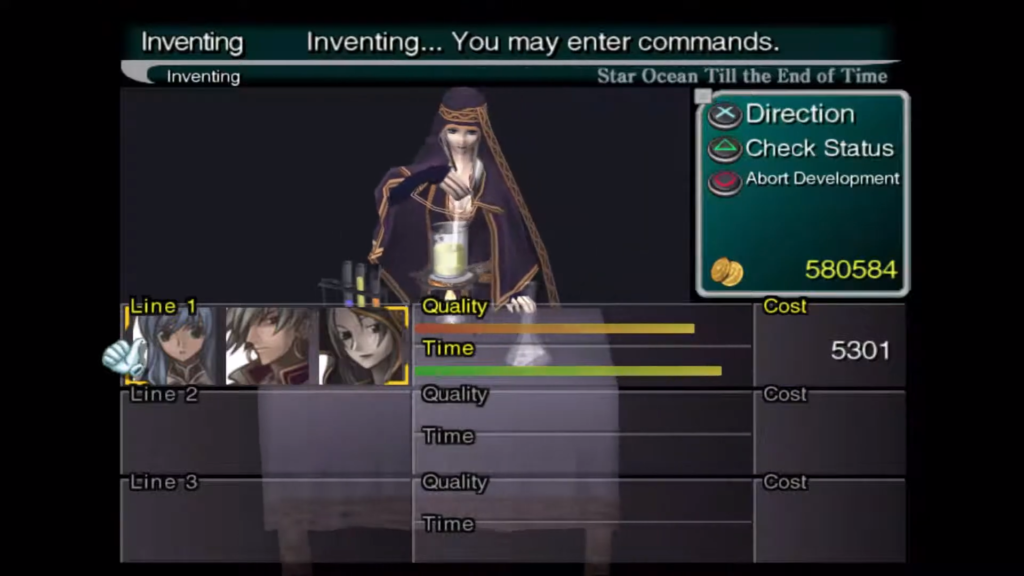
If you ignore the Item Creation system, you are essentially playing the game on “Hard Mode” without the rewards. The gap between store-bought gear and a customized, refined weapon from your own workshop is the difference between a butter knife and a lightsaber.
The “Fury” System: Why Mashing is a Death Sentence
We touched on the combat, but we need to talk about the Fury Bar. This is the mechanic that prevents Star Ocean 3 from being a mindless button-masher. Every action, attacking, dashing, using items, consumes Fury.
- The Anti-Attack Aura (AAA): If your Fury is at 100%, you automatically trigger a shield that stuns enemies who hit you with “Minor” attacks.
- Risk vs. Reward: If you exhaust your Fury by spamming attacks, you lose your shield and become vulnerable. It’s a dance of stamina management that requires you to actually read the enemy’s animations.
The Rewind Reality: 20 Years Later, and the Bar is Still This High
Most modern “Triple-A” titles are terrified of the player getting confused. They treat you like a Type 0 peasant who can’t handle a complex menu. Star Ocean 3 is the opposite; it expects you to step up. It gives you a universe that is massive, a crafting system that requires actual thought, and a story twist that is still being debated in the dark corners of the internet today.
It’s the ultimate example of Substance over Slop. In an era where games are designed to be “engaging” (read: addictive and shallow), Star Ocean was designed to be transformative. It didn’t just give me a world to play in; it changed the way I looked at the stars.
If you haven’t played it, go find a copy. If you have, it might be time to dust off the save file and see if you can still manage those patents. The simulation is waiting.
If you’re ready to dive back into the rabbit hole of gaming’s greatest hits and hardware deep-dives, you can find the rest of the journey in the [Rewind] Archive.
![Review: The [Specific Obscure Amazon Brand] Keyboard Mechanical Marvel or Plastic E-Waste?](https://gameplaytechy.com/wp-content/uploads/2026/01/keyboard-915520_1920.jpg)
Leave a Reply